 Your culture is not what you value. It’s what you schedule and get done.
Every student on my campus got a postcard from me. Every year, for every year I was a principal.
I want to tell you about it, but not for the reason you think. The postcards are not the point, its how I made it happen that matters.
Here’s the process I used. Every week, in PLC, I brought a notebook, a class list, and a stack of pens. At some point in that meeting, teachers named students: this kid, this specific thing, I’m proud of them for _______. We checked the name off the roster. I wrote the postcard that week. It got mailed.
That’s it. No app, no initiative, no rollout, no one-pager explaining the “why.” A notebook and a meeting I was already sitting in, and the chance for the teacher and the family to get a win. “Hey Tenley, Mrs. Brown told me you ACED your DRA test this week! I’m so proud of you! Mrs. Teamann”
Three things that a system did that my good intentions never would have.
It made appreciation specific, because someone else supplied the detail. I could not have told you what every student on my campus was doing well. No principal can. But a teacher could, and when the ask is “name a kid and tell me why,” you get the real thing. Not “great job.” The actual moment, from the person who witnessed it.
It made appreciation timely, because the meeting was weekly. The postcards went out within days of the thing happening, not at an end-of-year assembly when nobody remembers what they did in October. Timeliness was not a virtue I was practicing. It was a byproduct of the cadence.
It made appreciation equitable, because of the roster. This is the part I’d want you to steal. Left to memory and good intentions, we celebrate the same fifteen students over and over, the ones who are easy to notice. The checkmarks made the gaps visible. About halfway through the year, you’d start seeing which names had nothing next to them yet, and that changed the conversation in the room. Not “who did something great this week” but “who haven’t we seen yet?” (bonus tip: this is ALSO true for teachers that you’re celebrating!)
That question does not occur to you unless a system puts it in front of you.
And then it grew on its own. Teachers started bringing me names that weren’t students. A parent who had done something. A coworker who had stepped up. So those postcards went out too. I did not plan that. I did not have to promote it or incentivize it. Once appreciation had a container, people filled it.
Why does that matter to you?
Most of us treat culture as a values problem. We believe the right things. We say the right things in August. And then we are genuinely surprised in February when the building feels transactional and two of our best people are quietly updating their resumes. #retentionisyourbestrecruitment
Culture is not always a values problem. It can be a systems problem.
The things that get done in a school are the things attached to something already on the calendar. Everything else, no matter how much you believe in it, no matter how sincerely you meant it, becomes the thing you feel guilty about at 9 PM in your car.
So the question is not “do I value appreciating my people?” Of course you do. The question is: what meeting can it be attached to, and who is responsible for the roster?
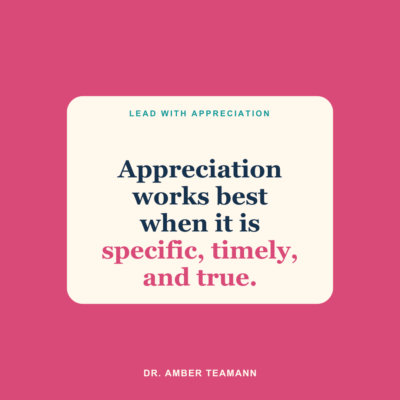
Appreciation works best when it is specific, timely, and true. But none of those happen on sincerity alone. They happen because you built a container and then kept showing up to it.
By adding it to the system, it got done. (Atomic Habits, anyone? ;))